The FMCG, Fast-Moving Consumer Goods, industry is one of the most demanding sectors in business.
You are dealing with high-volume daily transactions, multiple warehouses and routes, sales agents in the field, distributors and retailers, expiry dates, and batch tracking.
If your accounting system is not built for this level of complexity, it will slow you down and cost you money.
In this guide, we break down what makes the best accounting system for FMCG companies and which type of system actually fits your business.
Key takeaways
- FMCG companies need accounting systems that connect finance with inventory, sales, and operational workflows.
- Basic tools are too limited, while many generic ERP systems are too heavy and difficult to adopt.
- The best FMCG accounting systems combine real-time control, field visibility, usability, and fast implementation.
Why FMCG companies need more than basic accounting
Traditional accounting tools are not designed for FMCG operations. They are usually good at recording transactions, but they are not built to handle real-time inventory movement, sales agent activity, distribution workflows, and field operations.
That is why FMCG companies often need ERP-based accounting systems. These systems connect accounting with sales, inventory, and operations instead of treating finance as a separate isolated function.
Key features of the best FMCG accounting system
If you are evaluating a system for an FMCG business, certain capabilities are essential. Without them, finance and operations will keep drifting apart and management visibility will suffer.
1. Real-time inventory and accounting integration
In FMCG, every sale should update stock instantly. Inventory value should also be reflected in financial reporting so there is no mismatch between warehouses and accounting.
When inventory and finance are disconnected, businesses lose clarity and spend time reconciling avoidable inconsistencies.
2. High-speed invoicing
FMCG companies often handle large volumes of invoices every day. The system needs to keep up with that pace while applying pricing rules, discounts, and offers accurately.
High-speed invoicing reduces manual effort and helps prevent errors that can affect both revenue and customer trust.
3. Accounts receivable and payable tracking
A strong FMCG system should make it easy to see who owes you money, what you owe suppliers, and how those balances are aging over time.
Real-time receivables and payables visibility helps businesses protect cash flow and respond quickly to financial pressure.
4. Multi-warehouse and distribution management
FMCG operations rarely run from one simple stock location. Businesses often need to manage multiple warehouses, transfers, and distributor activity at the same time.
The right system should support that complexity without forcing teams into manual workarounds.
5. Batch and expiry tracking
For many FMCG businesses, batch control and expiry tracking are operational necessities. Without them, waste increases, risk rises, and stock decisions become less reliable.
A system that tracks batches and expiry dates helps reduce loss and improve product control.
6. Sales team and field operations management
This is where many systems fall short. FMCG companies often rely on sales agents working in the field, and finance alone is not enough to manage that reality.
Strong systems support visit planning, route management, sales targets, and performance tracking so the sales operation becomes structured instead of reactive.
7. Real-time financial reporting
FMCG leaders need fast access to profit and loss, cash flow, and sales performance. Real-time financial reporting creates the visibility needed for faster and better decisions.
In a high-speed business, delayed reporting usually means delayed action.
Types of accounting systems for FMCG
Most FMCG companies end up choosing between three broad categories of systems. Each comes with tradeoffs, and understanding those tradeoffs makes it easier to pick the right fit.
1. Basic accounting tools
Examples include Excel and simple bookkeeping software. These tools may work for very small businesses, but they do not scale well for FMCG complexity.
They typically lack inventory integration, sales and distribution tracking, and real-time operational visibility.
2. Generic ERP systems
Examples include large systems like Odoo, SAP, and Microsoft Dynamics. These platforms can be powerful and customizable, but they are often expensive, slower to implement, and more complex to use.
Many FMCG businesses adopt them expecting control, but struggle with the technical setup, training demands, and day-to-day usability.
3. Bruska ERP as a practical fit for FMCG companies
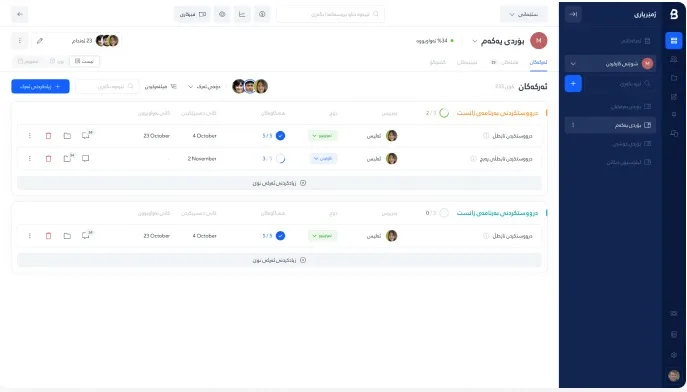
For FMCG businesses that need speed, simplicity, and operational control, Bruska ERP stands out as a practical solution. It is designed to support the realities of distribution and FMCG work rather than forcing teams into a generic workflow.
Bruska combines accounting, inventory, sales, and operational visibility in one connected system so teams can work faster with less confusion.
Why Bruska ERP is built for FMCG
Bruska is designed for faster implementation, stronger local fit, and lower friction in daily use. It supports Kurdish, Arabic, and English, aligns with how businesses in the region operate, and avoids the heavy setup burden common in large ERP platforms.
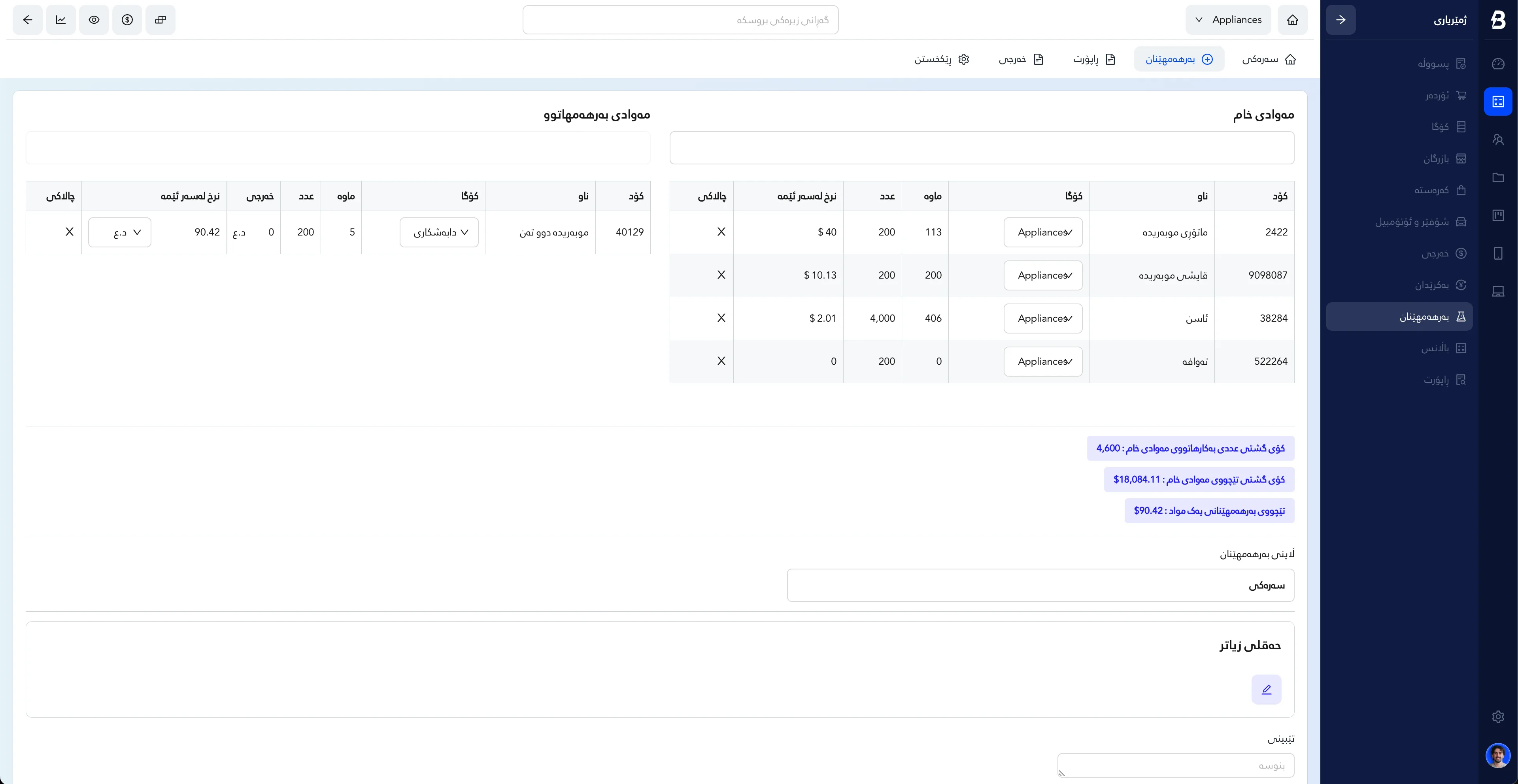
For FMCG and distribution teams, Bruska supports multi-warehouse management, distribution workflows, real-time inventory tracking, batch and expiry tracking, and integrated accounting.
Sales, field visibility, and mobile tools
One of Bruska’s strongest advantages is how it supports field and sales operations. Businesses can structure visit planning, track targets and performance, and monitor customer activity more clearly.
With GPS tracking and role-based mobile apps for merchandisers, warehouse teams, drivers, and shipping operations, the whole business becomes more connected beyond the office.
What makes Bruska the best choice?
Most systems sit at one of two extremes. They are either too simple and missing critical functionality, or too complex and difficult for teams to adopt.
Bruska sits in the middle in a strong way: powerful enough for FMCG operations, simple enough for daily use, fast enough to implement, and affordable enough to scale with the business.
Common mistakes FMCG companies make
Many FMCG businesses still rely on Excel for accounting, separate inventory from finance, fail to track sales agents properly, manage receivables weakly, or choose systems that teams never fully adopt.
These mistakes directly affect profit, control, and growth. The right system helps remove those structural weaknesses.
How Bruska helps FMCG businesses grow
With Bruska ERP, FMCG companies can manage accounting, inventory, and sales from one system, track the full operation in real time, equip teams with practical field tools, and build a more scalable operating model.
That combination of clarity, speed, and usability is what makes the system especially strong for this sector.
Conclusion
In FMCG, speed and control are everything. Your accounting system should do more than track numbers. It should support operations, empower the sales team, create real-time visibility, and help the business grow faster.
The best system is not just the one with the most features. It is the one your team can actually use every day while keeping the business connected and under control.
 Bruska ERP
Ready to upgrade your FMCG operations?
Book a demo with Bruska ERP and see how accounting, inventory, sales, and field operations can work together in one connected system.
more than 1,000 companies trust us

































More from Bruska
Continue reading
FMCG
Batch & Expiry Tracking for FMCG Businesses
Batch and expiry tracking helps FMCG businesses reduce waste, protect customer trust, and gain better control over stock movement and risk.
Read article
ERP
ERP Software for Iraqi FMCG Companies
Learn why Iraqi FMCG companies are adopting ERP software and what features matter most for distribution, inventory, finance, and field operations.
Read article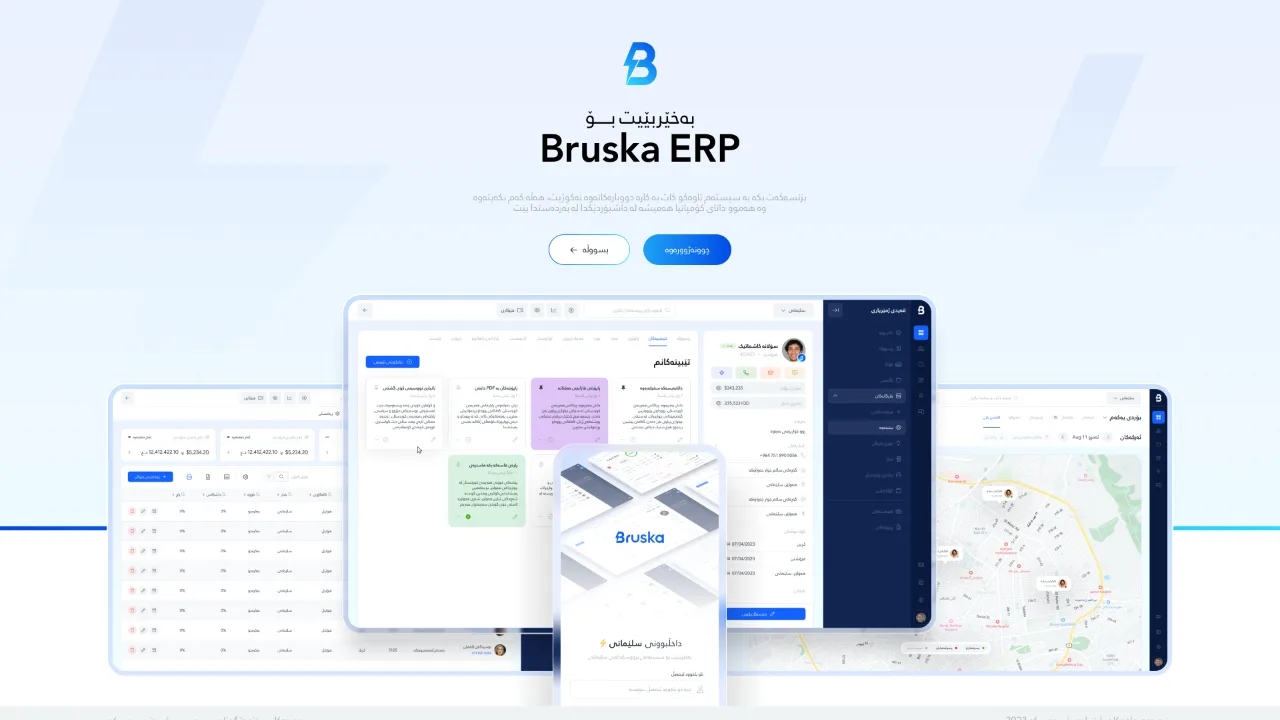
Accounting
Best Accounting Software for Businesses in Iraq
Explore the best accounting software options for businesses in Iraq and learn what matters most in localization, usability, integration, and real-time financial control.
Read article