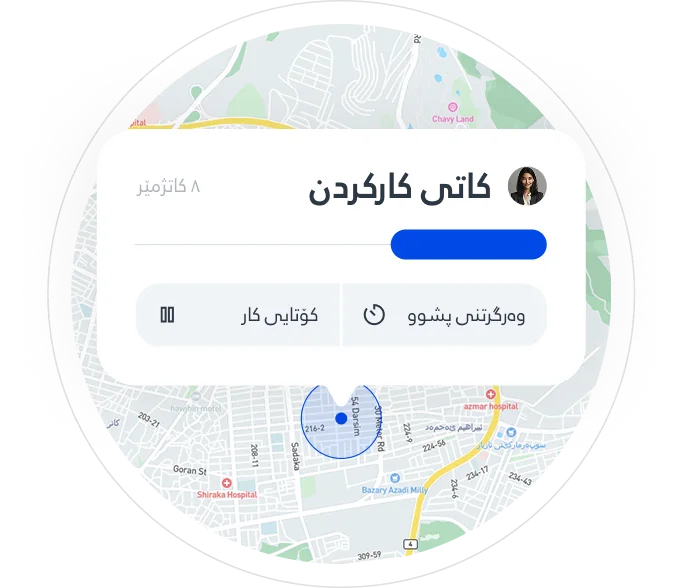
Managing employee attendance and salaries separately is one of the most common causes of errors, delays, and frustration in growing businesses.
Many companies still use Excel sheets for attendance, manual calculations for salaries, and WhatsApp or paper for tracking shifts.
The result is inaccurate payroll, unhappy employees, and wasted time.
In this guide, we explain how to track attendance and salaries in one system and why doing so is essential for efficient operations.
Key takeaways
- Attendance and payroll should always be connected because salary accuracy depends on real attendance data.
- Manual attendance and salary processing creates unnecessary errors, disputes, and delays.
- A centralized system improves payroll accuracy, transparency, and operational efficiency as the team grows.
Why attendance and payroll must be connected
Attendance directly affects salaries. When attendance and payroll are disconnected, salaries become inaccurate, overtime is miscalculated, and absences are easily ignored or counted incorrectly.
Payroll should always be based on real attendance data if a business wants fairness, consistency, and trust.
Common problems businesses face
Many growing businesses deal with manual attendance tracking, late or incorrect salary calculations, weak visibility into working hours, employee disputes, and too much time spent processing payroll.
These problems tend to grow with the team, which is why fixing the system early matters.
1. Track attendance in real time
One of the biggest mistakes is recording attendance at the end of the day or even at the end of the month.
Use real-time attendance tracking so check-ins and check-outs are logged immediately. Accurate payroll starts with accurate daily records.
2. Use a centralized system
Using separate tools for attendance and payroll creates duplication, inconsistency, and confusion.
Use one system for both so all employee data stays in one place. One connected system creates much stronger consistency and accuracy.
3. Define work schedules and shifts
Not all employees work the same hours, so attendance cannot be tracked properly without defined schedules.
Set working hours, shifts such as morning and evening, and days off clearly. This makes attendance and payroll calculations much more reliable.
4. Automate salary calculations
Manual salary calculation is slow and error-prone, especially as your team grows.
Automate salary components such as base salary, overtime, deductions for absences or late arrivals, and bonuses. Automation saves time and reduces mistakes.
5. Track overtime and late arrivals
Small time differences may seem minor, but they add up over time and can create fairness issues if ignored.
Track overtime automatically, record late check-ins, and apply rules consistently. Accurate payroll helps build trust with employees.
6. Link attendance directly to payroll
This is the most important step. Attendance data should feed into payroll automatically, so salaries are calculated from actual working time rather than manual adjustments.
That direct connection eliminates many of the discrepancies and disputes businesses face with disconnected tools.
7. Provide transparency to employees
Employees often distrust payroll when they cannot see how salaries were calculated.
Give employees visibility into attendance records, salary breakdowns, deductions, and overtime. Transparency reduces conflict and increases confidence in the system.
8. Generate reports instantly
Good systems should help management see attendance summaries, salary reports, overtime costs, and department-level performance quickly.
Instant reporting helps leaders manage teams better and identify issues before they become larger problems.
9. Support field and remote employees
Businesses with sales agents, drivers, and field staff often struggle more with attendance tracking because those employees are not always in one office.
Use mobile-based check-ins, and where appropriate, track location through GPS so attendance can be recorded accurately outside the office.
10. Reduce errors and save time
Manual systems usually create miscalculations, missing data, and processing delays.
Automate as much as possible, minimize manual input, and standardize the workflow. Efficiency improves quickly when error rates drop.
Common mistakes to avoid
The most common mistakes are managing attendance in Excel, calculating salaries manually, not tracking overtime, ignoring late arrivals, and using disconnected systems.
These habits create frustration for both HR teams and employees.
Benefits of using one system
When attendance and payroll are connected, salaries become more accurate, processing time decreases, employee trust improves, HR workload becomes lighter, and operations run more smoothly.
This is how modern businesses manage HR with more discipline and less chaos.
How Bruska helps simplify attendance and payroll
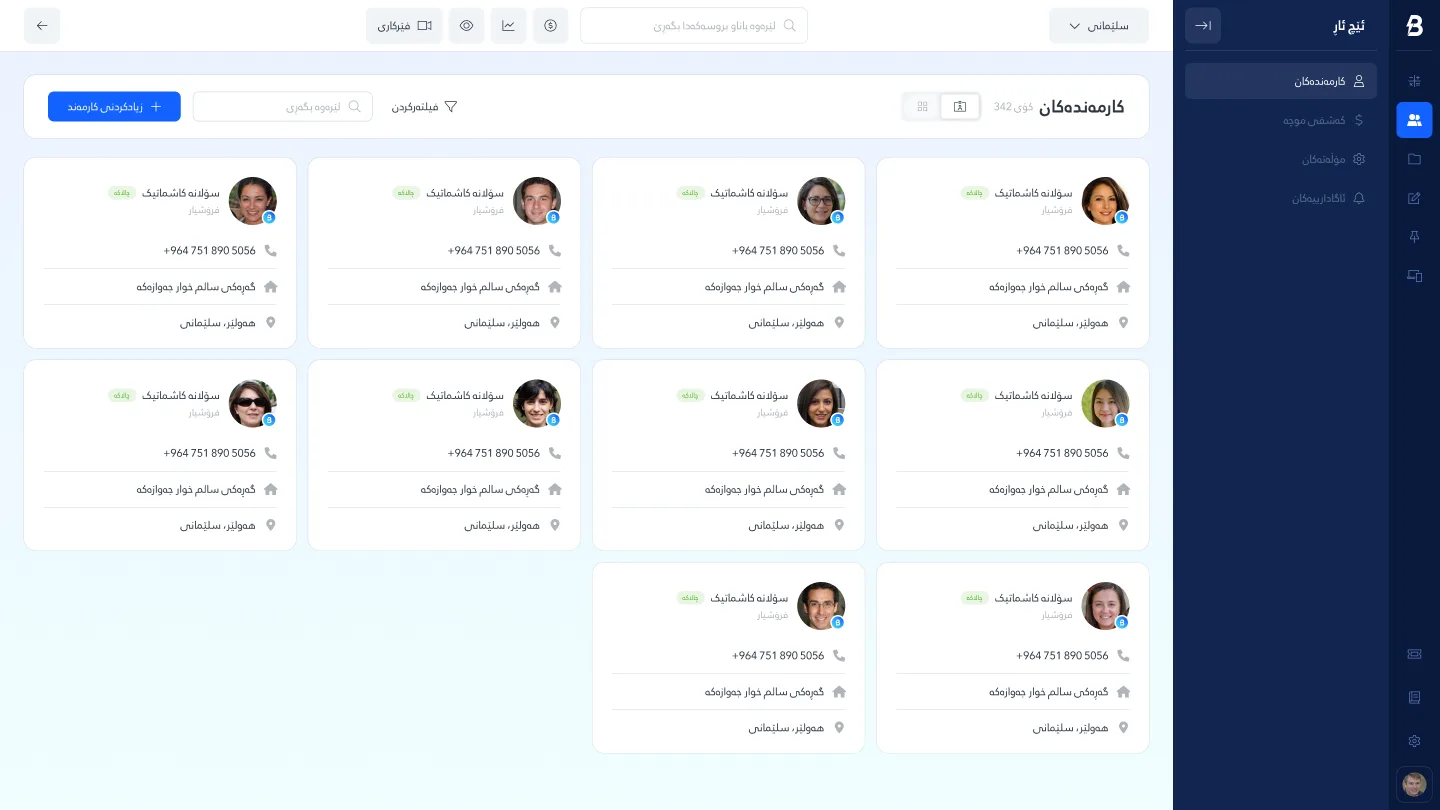
With Bruska ERP, businesses can track attendance in real time for office and field employees, connect attendance directly to payroll, calculate salaries, overtime, and deductions automatically, and provide employees with clearer salary breakdowns.
Bruska also helps teams across multiple locations work through one user-friendly system with Kurdish, Arabic, and English support.
Conclusion
Attendance and payroll are not just HR tasks. They directly affect employee satisfaction, accuracy, and operational efficiency.
When businesses manage both inside one system, they reduce errors, save time, build trust with employees, and make growth easier to manage.
The difference is not more effort. It is having the right system behind the process.
 Bruska ERP
Simplify attendance and payroll in one system
Book a demo with Bruska ERP and see how your business can connect attendance, payroll, overtime, and salary reporting through one simple system.
more than 1,000 companies trust us













































More from Bruska
Continue reading
HR
Top HR Challenges for Growing Companies (And How to Solve Them)
Learn the biggest HR challenges growing companies face and how better structure, visibility, automation, and systems can solve them.
Read article
FMCG
Batch & Expiry Tracking for FMCG Businesses
Batch and expiry tracking helps FMCG businesses reduce waste, protect customer trust, and gain better control over stock movement and risk.
Read article
ERP
ERP Software for Iraqi FMCG Companies
Learn why Iraqi FMCG companies are adopting ERP software and what features matter most for distribution, inventory, finance, and field operations.
Read article