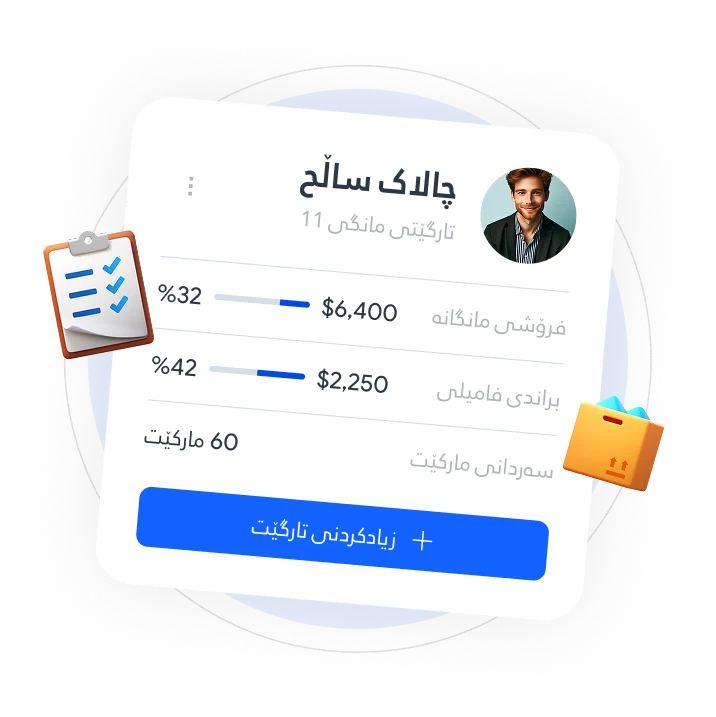
If you cannot measure your sales team, you cannot improve it.
Many businesses think they have a sales problem, but in reality they have a visibility problem.
They do not know what their sales agents are doing daily, which customers are being visited, which areas are underperforming, or why targets are not being achieved.
This is where a CRM system becomes essential.
In this guide, we show you how to track sales team performance effectively, especially for companies with field sales agents and distribution operations.
Key takeaways
- Sales performance improves when activity, execution, and targets are tracked in one system.
- Field sales teams need structure through visit plans, target tracking, and geographic visibility.
- A CRM helps businesses replace guesswork with real-time sales data and accountability.
Why tracking sales performance matters
Without proper tracking, sales agents often work without enough structure, opportunities are missed, some customers are ignored, and management is left depending on guesswork.
With proper tracking, leaders know what is happening on the ground, identify problems earlier, and improve performance more systematically. Data replaces assumptions.
The problem with traditional sales tracking
Many companies still rely on phone calls, WhatsApp updates, end-of-day summaries, or Excel sheets to monitor sales performance.
The result is usually incomplete data, delayed insight, and weak accountability. Teams spend too much time reacting after the fact instead of managing proactively.
The CRM approach to sales performance
A modern CRM system helps businesses track sales agent activities, customer visits, orders, revenue, targets, achievements, and geographic coverage in one place.
That connected visibility is what makes performance management practical instead of chaotic.
1. Track daily sales activities
The foundation of sales performance tracking is activity visibility. Management should know how many visits each agent made, which customers were visited, and what happened during each visit.
That includes whether an order was taken, whether a follow-up was needed, or whether no sale happened. Activity drives results, so it has to be visible.
- Track how many visits each agent completes.
- Record which customers were visited.
- Log the outcome of each activity clearly.
2. Implement visit plans for field sales agents
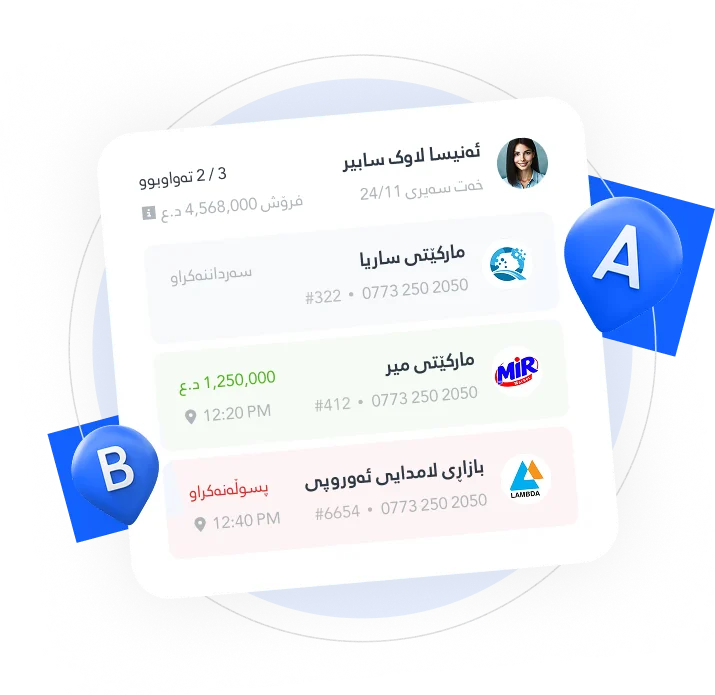
Field sales without structure usually turns into chaos. A visit plan defines which customers should be visited, on which days, and in which order.
This matters because it ensures market coverage, reduces missed opportunities, and helps teams work more efficiently instead of operating randomly.
Plan versus reality is where real insight happens
Tracking performance is not only about creating plans. It is about comparing planned visits with actual visits and understanding the gap.
Businesses should look at missed customers, extra visits, and unplanned activity. That comparison reveals whether execution is strong or whether the process is breaking down on the ground.
- Compare planned visits against actual visits.
- Identify missed customers and unplanned visits.
- Use execution gaps as a performance signal.
3. Continuously revise visit plans
Markets do not stay static, and visit plans should not stay static either. Customer priority changes, visit frequency needs adjustment, and routes or zones may need revision.
A plan that never evolves eventually weakens sales performance instead of supporting it.
4. Set clear sales targets
Without targets, performance cannot be measured meaningfully. Teams need monthly targets, quarterly targets, individual agent targets, and team-level expectations.
Targets create direction and help the business understand whether activity is actually producing the intended results.
Go beyond simple revenue targets
Revenue alone does not tell the full story. Strong performance tracking also looks at number of visits, number of orders, conversion rate, and new customers acquired.
This creates a more complete picture of whether sales teams are active, effective, and improving over time.
- Track visit volume.
- Track number of orders and conversion rate.
- Track new customer acquisition alongside revenue.
5. Monitor quarterly plans
Daily execution matters, but strategic direction usually happens quarterly. A quarterly plan should define revenue goals, market expansion priorities, focus products, and sales campaigns.
Once the plan is set, teams should track execution weekly so strategic goals stay connected to daily action.
6. Identify gaps in the market
This is where many businesses miss growth opportunities. A strong CRM should help you identify missing products, missing customers, and missing city or zone coverage.
That means answering practical questions such as which products are underperforming, which customers are inactive, and which areas are not getting enough attention.
- Find under-sold products.
- Identify inactive or unvisited customers.
- Spot under-covered cities, routes, or zones.
7. Track sales by geography
Breaking down performance by city, zone, route, and sales agent helps the business understand where it is strong and where it is weak.
This allows management to reallocate resources, improve coverage, and expand more intelligently.
8. Measure individual sales agent performance
Each agent should be evaluated using clear criteria such as visits completed, sales generated, target achievement, and customer coverage.
This creates accountability, improves fairness, and makes coaching more specific and useful.
9. Use real-time dashboards
Instead of waiting for delayed summaries, businesses should be able to see live sales performance, daily activity, target progress, and team comparisons through dashboards.
Real-time visibility leads to faster decisions and stronger performance management.
10. Automate tracking with CRM
Manual tracking does not scale well. A proper CRM helps track activities automatically, monitor field agents in real time, generate performance reports instantly, and identify issues before they become larger problems.
Automation increases reliability while reducing reporting friction.
Common mistakes businesses make
Many companies fail because they do not track daily activity, do not build visit plans, do not compare plan versus execution, work with weak targets, ignore geographic gaps, or rely on manual reporting.
These habits create inconsistent and unpredictable sales outcomes.
How Bruska helps businesses manage sales teams
With Bruska ERP’s CRM, businesses can create visit plans for field agents, compare planned versus actual visits, set monthly and quarterly sales targets, track cities and zones, identify missing products and growth opportunities, and monitor agents with GPS visibility.
That turns sales management into a more structured, measurable, and scalable operation.
Conclusion
Sales performance is not about luck. It is about structure, visibility, and execution. When businesses combine clear plans, defined targets, real-time tracking, and continuous improvement, they turn their sales team into a much stronger and more consistent machine.
The key is not just measuring performance. It is measuring the right things and acting on them quickly.
 Bruska ERP
Take control of your sales team with CRM
Book a demo with Bruska ERP and see how your business can track field visits, targets, routes, and sales performance in one connected CRM system.
more than 1,000 companies trust us













































More from Bruska
Continue reading
CRM
Why Your Sales Team Is Underperforming (And How to Fix It)
Sales teams usually underperform because of weak systems, not weak effort. This guide explains the structural reasons behind low sales performance and how CRM helps fix them.
Read article
FMCG
Batch & Expiry Tracking for FMCG Businesses
Batch and expiry tracking helps FMCG businesses reduce waste, protect customer trust, and gain better control over stock movement and risk.
Read article
ERP
ERP Software for Iraqi FMCG Companies
Learn why Iraqi FMCG companies are adopting ERP software and what features matter most for distribution, inventory, finance, and field operations.
Read article